
Industry Leader Insights: Risk Taker or Improver?
Following on from last weeks post, here’s the full interview with Danielle Bekker, FTSE 100 board level Innovation Director, who’s worked with companies such as AB InBev and SAB Miller.
Great insight to where the UK sits against it’s global counterparts, our appetite for risk and how you can improve business innovation.
To see the full video check out below:
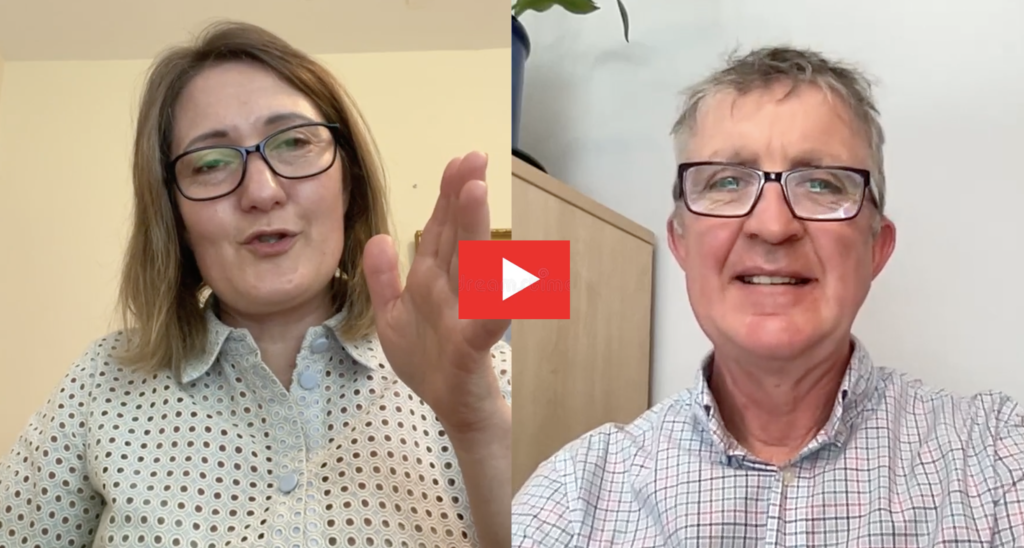
To hear more on this subject, get in touch and we can line up a call with Danielle.
Please see full transcript of video below.
Have a great week!
Den
Transcript of Denis O’Driscoll’s and Danielle Bekker
Denis O’Driscoll: How does the UK compare to all the other countries in the globe that you’ve been involved with?
Danielle Bekker: I mean, it’s interesting. I would say from my personal experience, I would say that the approach to maybe innovation and adopting new ideas in the UK was not as good as I had seen in other countries. But if you look at it on the data perspective, the UK performs really well on number of breakthrough innovations that it achieves compared to our sort of European colleagues. And if you look at our risk appetite, it seems to be closer to the US than it is to Europe. So if I have to reflect to myself, I don’t think it’s around how we do breakthrough innovation necessarily, but it’s how we do those little innovations better, quicker, things like that. And I see a little bit more that sort of not invented here syndrome in the UK. I think some of the countries I had the pleasure of working with, it was marked how if they saw a good idea being in another company or another part of the business, they would just adopt it, trial it and put it in, you know, that sort of steal with pride mentality. Whereas sometimes in the UK, there was far more of this intellectual arguments as to why something wouldn’t work and why it wasn’t appropriate and all this kind of thing. So I think sometimes good ideas take longer to get in place than they should because of that delay, really. The other thing to add on to that, oh, sorry, is that the UK at the moment is not in a good space, really. I think, you know, high inflation consumers also keen to spend. So you’ve got this backdrop as well of people tightening their belts in the CG sector and consumers. And so what does that mean for innovation and how do we respond to those challenges?
Denis O’Driscoll: When you go into a business, what are the things that you do to get a handle on where they are on the innovation front?
Danielle Bekker: It’s a good question, because I think I’ve also maybe learned this the hard way along the way. But often if you’re brought into an organization to do work on help us define our innovation strategy or our five-year plan or anything like that. First, what you probably need to do and understand is what you’ve been briefed. Is that actually what the organization wants? Or has the organizational model and culture to execute? I did some work for an organization where I was brought in because they wanted to really have a much better horizon three innovation pipeline. So really the longer-term kind of more breakthrough stuff. But the more we work through it, more discussed it with the CEO that actually wasn’t in the DNA of the company, they didn’t have the risk appetite to spend in that space. What they were really, really good at was taking competitive products and just making them cheaper and better quality. And that actually was what the innovation strategy was about. So then we reframed it as how do you do that process better and embed that into the DNA of the organization? It was massively successful, but not what they originally thought that they wanted. And I think one way you can really assess how risk averse people really are is to have a look at the innovation funnels. Innovation should have loads of ideas and then one or two things should ultimately come out the other end, be that a new process or a new product. And in companies that are quite risk averse, typically what goes into the funnel comes out the funnel. So there’s already been a decision made that it’s going to get launched, whereas people who genuinely have a more robust appetite for risk or that fail-fast stuff will come out of that funnel. It will get pivoted. It will get reframed or it will just get dropped completely in much more of a dynamic way. So having a look at really how that funnel is and how things are coming out gives you a good sense of the real approach to innovation and the appetite for risk. I also like to have a look at some other parts of the business, like how good are they at problem-solving? I always think this is a good indication of how you might think about innovation, because if people are really good at solving problems, capturing those learnings and adapting, that’s the kind of DNA culture that you need to support innovation. And then how do you, especially if you’re talking about FMCG and manufacturing, how do you engage with the shop floor with ideas? Because it’s not just a suggestion box. I think the worst thing you can do is say, right, we’re going to innovate, we’re going to involve the whole company. And then the solution is to put in an innovation suggestion box because that’s probably a recipe for not success. And there’s just so many better ways to do that and embed it as a rhythm and a way of doing things with continuous improvement on the shop floor. And then I suppose lastly, how do they think about innovation? Do they define it as the solution that they’re trying to solve? So if we wanted to say, launch a low-calorie chocolate, have they described the problem as that I want a tasty, low-calorie chocolate? Or have they framed it as a problem or an opportunity to say, I would like a guilt-free afternoon treat that I can enjoy guilt-free. You know, if you frame that, you know, you’re much more likely to get a much broader set of ideas, hopefully a richer outcome than defining it into the solution that you really think it should be. So those are the sorts of things I might have a look at if I was into an organization.
Denis O’Driscoll: When you’ve seen those things, what do you do to actually get there? What sort of things do you implement?
Danielle Bekker: I think firstly, I think knowing who in the organization to kind of work with, I think particularly people like long-standing employees, they can either be your biggest asset or your biggest liability. They’re either the people that will never work with credit before and they’re very adverse to change. Or they can be the biggest advocates of yes, we have all these ideas, we have all these thoughts, we know we can do things better and sort of channeling that. So I think being quite targeted as to who you work with as really those, I suppose, early adopters, but also around getting cross-functional working in place. I think the biggest downfall for effective innovation is when departments don’t work well together. So if consumer insights passes the solution over to the marketing team, who then does a bit of work and then says to the technical or NPD team, give me this, you’ve probably got not a very good solution along the way rather than people working together to say, you know, what are the ideas we want to go after? And another thing I think you see often in organizations, and again, it links back to their risk appetite, is how bold are they with their ambitions? Because often, and this, I think is sometimes you see this in the UK as well, rather than saying, right, we’re going to save 100 million dollars. Don’t know how we’re going to do it, but that’s the target. And then everyone works to try and deliver to this really ambitious target rather than first knowing, let’s launch a new brand that’s worth, you know, 100 million dollars, whatever the case may be. The bolder the targets are, the more likely you are to get a better solution than setting more conservative targets and getting a kind of average outcome.
Recruitment, I guess, is important, depending on how an organization is involved. The profile of a person who’s going to be good at innovation is not going to be the same as the person who’s going to be really good necessarily at running a factory or supply chain or something like that. So thinking very carefully about having the right skill sets, competencies in your staff with the appropriate level of diversity of thinking and approach is going to set you far better for success than not.
Denis O’Driscoll: Yeah, we see that a lot. We do. We use Thomas International and we do a lot of that with behaviours. What behaviours, what qualities are you looking for?
OK, listen, that’s been really helpful. Thank you. Very insightful to my network, our network out there. If you’d like to hear any more, get in touch and we can line a meeting up with Danielle. Thank you, Danielle.
Danielle Bekker: Thank you.
